
Why “Staying Seated” is Inherently Dangerous: Reimagining Home Safety for Active Seniors
When an aging parent becomes a bit unsteady on their feet or is recovering from a recent procedure, our natural instinct as children is to protect them. We find ourselves saying things like, “Don’t get up, let me get that for you,” or “Just stay seated on the sofa where it’s safe.” It comes from a place of pure love. But from an Occupational Therapy (OT) perspective, this well-meaning coddling is actually one of the most dangerous things we can do.
At ReU Living, our clinical team looks at environment and mobility through a completely different lens. True safety isn’t about standing still. In fact, locking a senior into a sedentary lifestyle does the exact opposite of protecting them.
The Danger of “Deconditioning”
There is a common myth that immobility equals safety. The fiction is simple: “If I stay seated, I won’t fall.”
The clinical reality, however, is a harsh paradox: reducing activity leads to rapid deconditioning and muscle loss, which significantly increases long-term fall risk. When a senior stops moving, their core strength becomes weak, their balance deteriorates, and their confidence plummets. The reality about muscle is that —if you don’t use it, you lose it.
Furthermore, the psychological impact of a fall is often more restrictive than the physical injury itself. A single fall doubles the chance of falling again simply due to the fear of falling. This fear traps individuals in a cycle of constant caution, stripping away their autonomy.
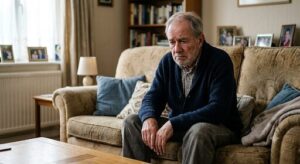
Our goal as OTs is never to eliminate movement to avoid risk; it is to manage environmental risk so we can preserve a senior’s absolute autonomy and freedom of movement.
Walkers and Canes are Tools of Freedom, Not Signs of Weakness
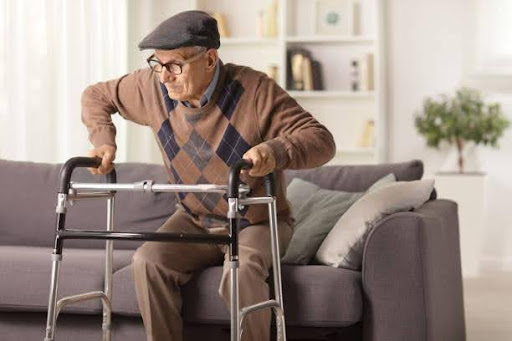
To change how seniors move, we first have to change how we view mobility aids. Far too often, seniors resist using a cane or a walker because they view them as symbols of frailty or “getting old.” We need to smash that stigma.
The OT Fact: Mobility aids are independence tools, not signs of weakness. They provide the exact mechanical stability needed for a person to stay socially active, physically engaged, and completely in control of their own life, in a safe manner.
An aid doesn’t mean you are giving up; it means you are choosing to keep exploring, whether that’s walking down a hallway or taking a gentle stroll at the backyard.

Tuning the Environment: The 50% Rule
Statistics show that 50% of all senior falls happen directly at home. But instead of trying to “fix” the person or limit their life, OTs focus on tuning the environment. We bridge the gap between a person’s current functional capacity and the architectural demands of their living space.
If your parent or loved one is transitioning back home after a short-term hospital stay or surgery, look out for these hidden household hazards and implement these premium micro-fixes:
- The “Power Zone”
Are daily items stored in overhead cabinets or deep bottom drawers? Over-reaching causes an immediate loss of balance, while deep bending causes orthostatic dizziness (that sudden head-rush when standing up). Climbing ladders is a massive, high-risk hazard.
- The Fix: Reorganize the space so that every single daily essential lives strictly in the “Power Zone”—the ergonomic sweet spot between the hips and shoulders.
- Bathroom Engineering
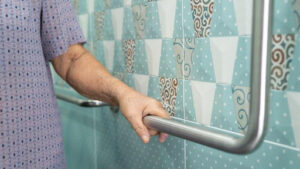
The bathroom is statistically the highest-risk zone in any home. Simple, elegant modifications can instantly restore private independence.
- The Fix: Ensure grab rails are professionally installed at the exact correct height and location for your loved one’s specific reach. Swap out overly complicated modern luxury taps for traditional, familiar fixtures that don’t cause cognitive confusion. Always ensure non-slip flooring is laid down and that the lighting is entirely shadow-free.
- Eliminating “Visual Static” and Sensory Illusions
As we age, our brains process visual data differently, especially for those experiencing early cognitive decline or dementia.
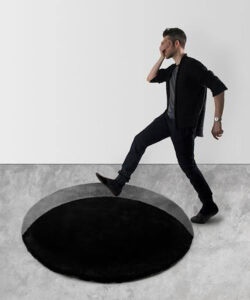
- The “Black Hole” Effect: A dark-colored rug placed on a light-colored floor can look exactly like a deep pit or a hole in the ground to a senior. This causes panic and hesitant, dangerous stepping. Opt for uniform, continuous floor colors instead.
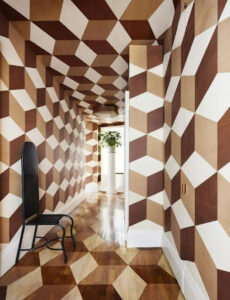
- Visual Static: Busy floral or geometric patterns on carpets and upholstery can be visually overwhelming, and are sometimes misinterpreted as loose debris or bugs on the furniture. Keep surfaces clean, minimalist, and high-contrast.
The Proven Impact of Professional Care
Making minor adjustments like cleaning up clutter and adding better lighting is a great start, reducing environmental fall risk by 22%. However, robust clinical data shows that a comprehensive, professional Occupational Therapy Home Modification slashes that risk by a massive 39%.
Bridge the Gap at ReU Living
If your home isn’t ready, or if your loved one needs a safe, premium space to rebuild their walking confidence immediately after a hospital discharge, that is exactly why our ReU Living exists. From an accessible toilet to expert, one-on-one physiotherapy and OT support, we ensure your parent transitions from the hospital back to independent life seamlessly.
Ready to step into confidence? Talk to our team today about our premium post-op and short-term respite care suites.